


Hey There,
I’m writing this from my hotel room with my suitcase half-packed and the airline app open in another tab. If you haven’t been following along, there’s an FAA ground stop, and I’m doing the thing every traveler does: telling myself it won’t affect my flight. My flight is special. My flight has good energy.
In the meantime, I have a lot to tell you about Author Nation.
The weirdest, most wonderful conference I’ve ever attended
For the last few years, Author Nation has meant one thing to me: the programming director clipboard. It wasn’t a literal one (although honestly, maybe it should have been). It was the mental one, the running list in the back of my head of every speaker, every room change, every AV gremlin, and every “Chelle, do you have a second?” that was never actually a second.
This year I didn’t carry it.
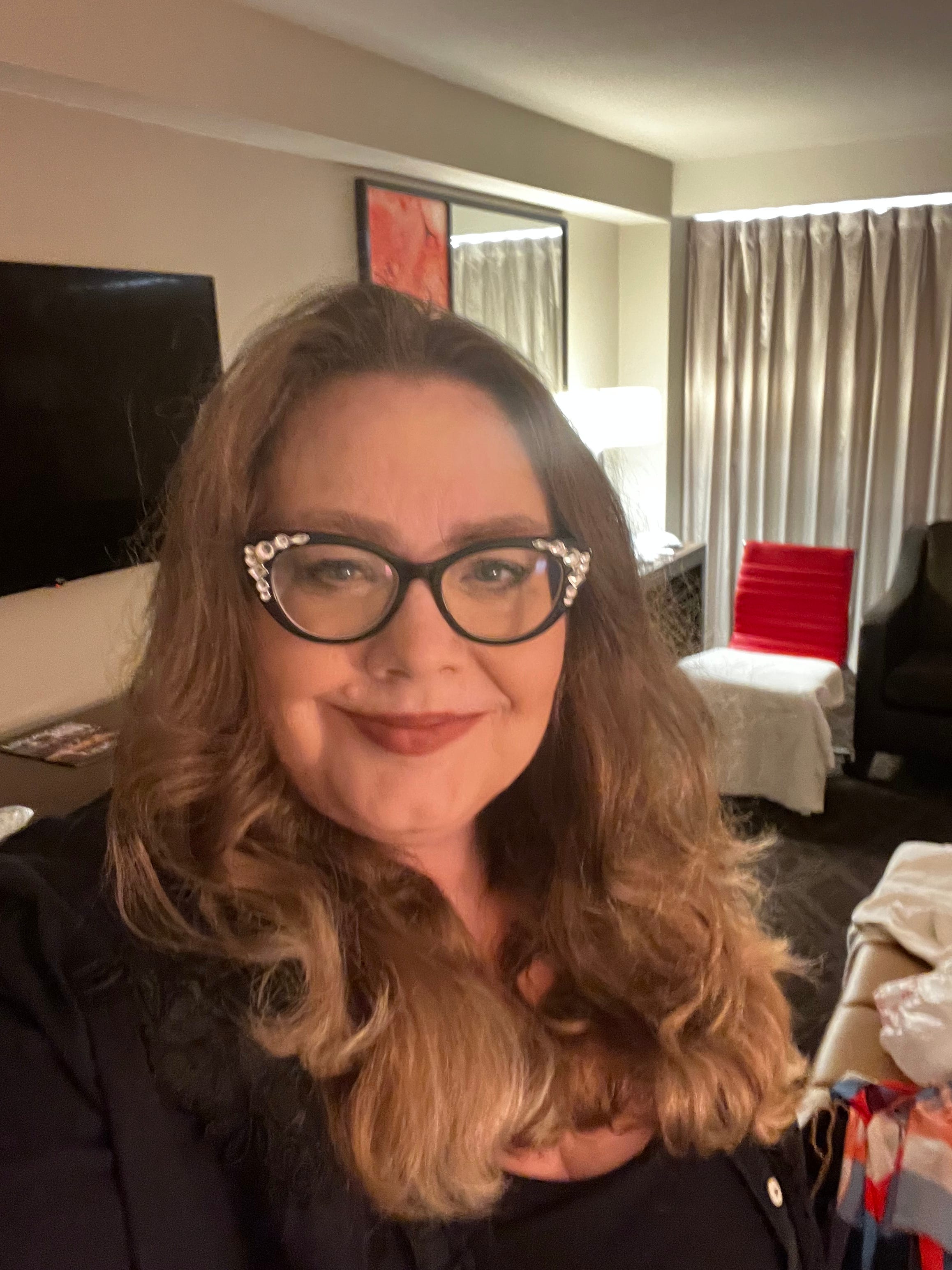
I showed up as a speaker and an attendee. That’s it. I sat in sessions and took notes. I had hallway conversations that didn’t end with me sprinting off texting furiously. I ate lunch sitting down, like a civilized person and actually left the building. Like, what?
It was strange. It was like going back to your old high school as a grown-up: everything is familiar, but you’re seeing it from a totally different angle, and you notice things you never had the bandwidth to notice before.
And I want to say this loudly: Jen B. Green took the content to a whole new level. The programming this year was smart and fresh, and it was exactly what this community needs right now. Watching someone you respect take something you built and make it better is a special kind of joy. Jen, I’m so proud of you, and I loved being in the audience for it.
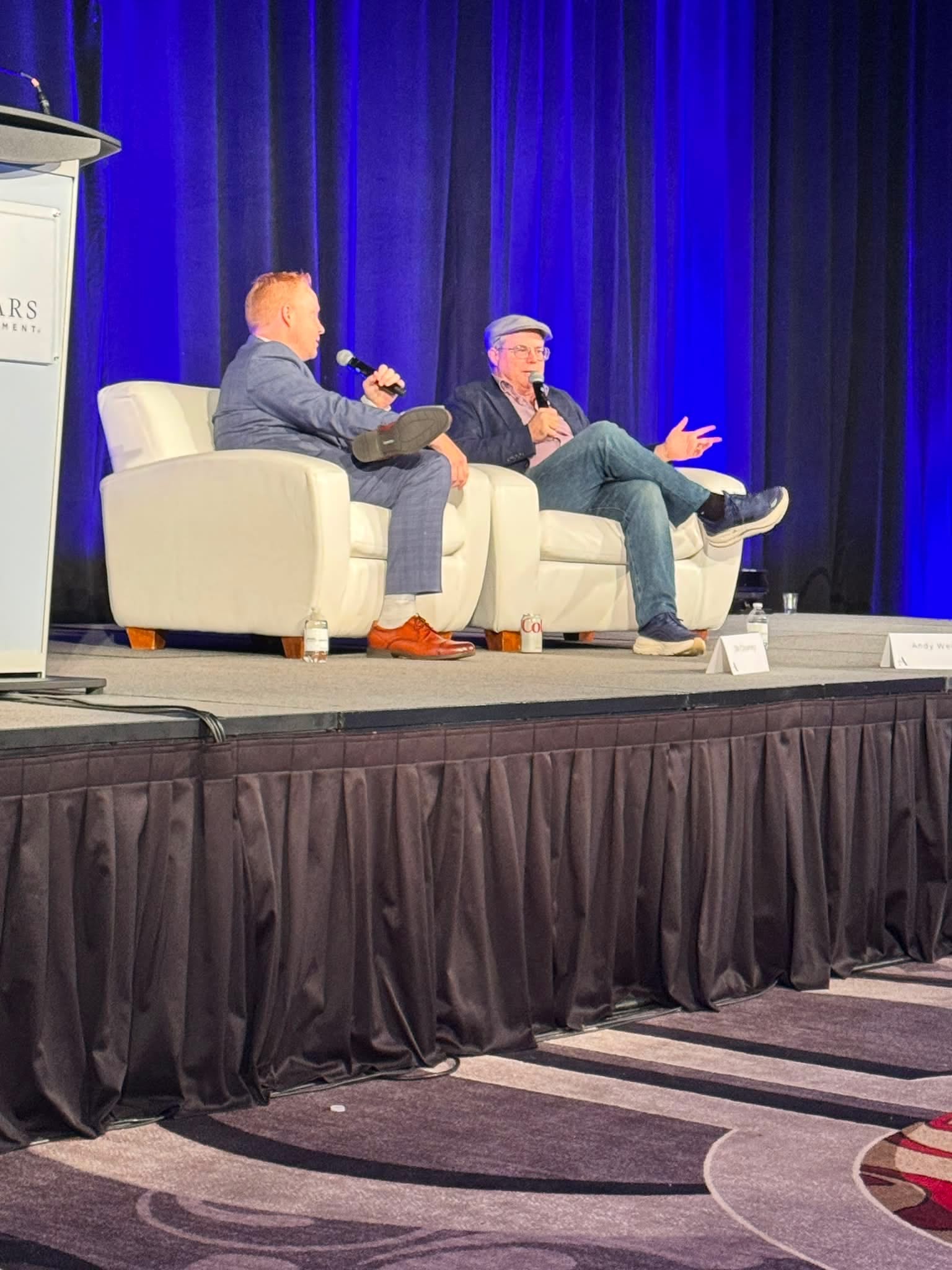
Andy Weir is very funny
I expected Andy Weir to be brilliant. I didn’t expect him to be that funny. He’s charming, quick, and self-deprecating in the best way. He talked openly about his writing process and that his goal is to get better at writing characters. He says he’s pretty good with plots (DO. YOU. THINK???) but that most of his characters read flat and usually don’t have a development arc. Isn’t that wild?
He also took a minute to clarify his futurecasting on AI, and it was a hot topic the rest of the night.
Here’s the gist. Andy believes we’re headed toward a lot more personalization. Eventually, he thinks, AI will be able to write books on demand that are as good as what writers produce today. Ask for a cozy mystery set in a lighthouse with a cat named Biscuit and a twist in chapter twelve, and you’ll get it.
Before you throw your laptop across the room, here’s the other half of what he said: that doesn’t mean artisanal writing goes away.
His comparison was live theater versus movies and TV. When film arrived, people predicted the end of the stage. When TV arrived, people predicted the end of film. When streaming arrived... you get the idea. Broadway is still selling out. People still pay real money to sit in a dark room with strangers and watch humans perform live, even though they could watch something for free on their couch in sweatpants.
There will always be a world where writers have a home.
I agree with him. I’ll go one step further, because this is the soapbox I’ve been standing on for a while now (and it’s a comfy soapbox, I’ve had it custom-made):
Your relationship with your readers is how you avoid being disintermediated by AI.
“Disintermediated” is a fancy word for “someone cut you out of the middle.” A machine can generate a book. It can’t be you to the people who already know you, who answer your emails, who show up in your reader group, who’ve been waiting two years for book four and will riot if you kill off that one character. (You know the one.)
Fun fact: Andy Weir answers his own email. He doesn’t have an assistant. Mind blown.
Readers don’t only buy stories. They buy the storyteller. That relationship is the one thing in your business that can’t be automated, packaged, or replicated by a model with a lighthouse and a cat named Biscuit.
So protect it. Feed it. Build it on purpose.
My week, in three sessions
Since I wasn’t running the show, I got to do my favorite part of any conference, which is teaching. Although this week I was plagued by the dreaded con crud on day two. Pretty sure it’s kid cooties, but I will admit the smoke this year was particularly heinous.
AI for Launch Plans walked through using AI as a launch project manager, from the countdown calendar to the post-launch follow-up. AI is great at remembering that you forgot to email your ARC team. It’s less great at knowing your readers, so you stay in charge of the decisions.
AI for Marketing covered using AI for copy, social, and campaigns without ending up with captions that read like a LinkedIn influencer wrote them on a treadmill. Marketing is where most authors I talk to feel the most overwhelmed, so this one always gets a full room and a lot of questions.
On Friday I tried something new: a 3-hour, hands-on session where we built an AI Assistant together. I was nervous about asking people to sit in a conference room for three hours in Las Vegas, with sketchy conference internet. Watching those lightbulbs go on was the highlight of my week. Shout out to my partner in crime Bradley Charbonneau for being my techy wing man. (Princess Elowyn the most brilliant and delightful 4-year old grandbebe in the universe™ calls him Brad-a-lee from Hamsterdam)
If you missed it, you can still get in. More on that below.
The pro versus con AI conversation
I heard more pro-versus-con AI debate at this conference than I ever have before, in sessions, in hallways, and definitely, DEFINTELY at the Vellum booth. The Brads are listening to everyone and hanging in there, I can report.
I think the real conversation is always going to be more complicated than two sides.
I don’t believe using AI is inevitable. You can have a fulfilling writing life without touching it, and if writing is the place you go to be fully yourself, protect that. Nobody gets to tell you you’re behind.
I do think AI is an opportunity, and it matters most if your goal is to make a living from your writing. A writing business includes marketing, admin, ads, newsletters, metadata, launch plans, customer service, bookkeeping, and about forty other jobs nobody mentioned when you typed THE END on your first draft. AI can take a lot of those jobs off your plate. Whether you want that is your call.
Building a moat around your business
What I’m watching most closely, and teaching, is how to build a moat around your business.
Agentic AI has moved fast. We started with chat, where you typed a question and copied and pasted the answer. Then came AI agents that could take a task and complete it. Now we have personalized AI agents, like OpenAI Dots, Claude Duet, Meta Muse, and GrokBot, that learn how you work and act on your behalf.
They work brilliantly. I use them, and I’m not here to trash them.
What I want authors to understand is that each of these personalized assistants is a packaging of what every AI model can already do natively.
The model is the engine, and the assistant is the car built around it, with heated seats and a voice that greets you by name. It’s a very nice car. But you’re leasing it, and the company that owns it decides what it costs next year.
We’ve built on rented land before
As indies, we control very little. We don’t own the retailers, and Kindle Unlimited became Kindle+ without anyone asking our opinion. We don’t own the social networks, which is why organic reach on Facebook is a fond memory and why Meta had to pause its own business terms update earlier this month. We don’t own the ad algorithms either. If you’ve ever watched a profitable campaign fall apart overnight for reasons nobody could explain, I’ve been there with you.
Most of our businesses sit on rented land. If we’re not careful, our AI workflows will end up there too.
The lock-in is by design. The more of your voice, your processes, and your business you pour into one company’s assistant, the harder it is to leave, and that’s how these companies plan to keep you.
There’s also the money. The frontier AI companies are losing a lot of it right now. We’re all enjoying the early-adopter pricing, where twenty dollars a month buys an astonishing amount of help. At some point these companies will have to satisfy their shareholders, and that could mean charging for features that are free today or raising prices to a level a small author business can’t justify. I’ve watched every platform authors fell in love with go through some version of this, and I expect AI to follow the same pattern.
Stay nimble with a second brain you own
I want us ready for whatever comes, and the best way I know to do that is to keep your business knowledge somewhere you control and point any AI agent at it.
The second brain I teach lives in Obsidian, and I organize it with the PARA method:
Projects are things with a finish line, like this month’s launch, the box set you keep promising yourself, or your prep notes for the summit.
Areas are the ongoing parts of your business that never really finish, such as each pen name, your newsletter, your ads, and your finances. This is where your processes live: the launch checklist, the newsletter template, and the ad playbook you’ve rewritten four times.
Resources are the reference material you keep reaching for, like craft notes, a swipe file of blurbs you love, conference notes (hello, Author Nation), and the prompts and skills that work for you.
Archives are where finished projects go when they’re done. Past launches, what happened, and the lessons you paid for in ad spend all end up here, and they’re gold the next time you plan something similar.
Whichever AI tool you use this year, you point it at that folder and tell it who you are and how you work. If prices change, terms change, or a better tool comes along, you own your files and switch. Or you can use multiple AI Agents. I use what I call Claudex (Claude + Codex in one) You don’t have to rebuild your voice from scratch in a new tool, because it already lives somewhere you control.
Build it with me at the AI Tech Summit, November 20–21
Indie Author Training’s AI Tech Summit is next weekend, and it’s virtual, so you can attend from your couch, your office, or a hotel room during a ground stop.
Friday, November 20, Day 1 (free): A tour of the AI tools available to authors at every stage of the business, from assistants that handle the business side of publishing to tools for drafting and audio. We’ll be honest about where each one falls short, too.
Saturday, November 21, Day 2 ($499): Hands-on workshops and walkthroughs so you can put Day 1 into practice. Saturday includes me teaching the same 3-hour “Build Your AI Assistant” session I taught at Author Nation yesterday. If you couldn’t be in that room, you can build yours alongside me live and leave with an assistant pointed at your own second brain.
Every session is recorded and available for replay for at least 30 days, so Thanksgiving prep won’t make you miss anything.
👉 Sign up: https://summits.indieauthortraining.com/ai-tech
Before that, I’m going live Wednesday
On Wednesday’s weekly IAT webinar, I’m recapping Author Nation: what’s big, what’s happening, and what you should be paying attention to in your indie author career right now. I’ll cover the trends I saw, the conversations I keep replaying in my head, and which shiny things I think you can safely ignore.
Wednesday, November 18, [TIME] ET
👉 Register: https://webinars.indieauthortraining.com/talks/whats-big-whats-happening-what-should-you-be-paying-attention-to-in-your-indie-author-career-right-now/
Bring your questions. I’ll bring my notes and, with any luck, a live stream of my brother Rob prepping Thanksgiving, as our family’s resident chef.
Before I go check the airline app again
If one idea from this email sticks, I hope it’s the second brain. Start small this week by putting your brand guide and one series bible in a folder you own. Everything you add after that makes the next tool easier to use and easier to walk away from.
Now I’m going to go refresh that app again and maybe play a few hands of Blackjack to pay for some extra hotel nights, just in case.
See you Wednesday,
Chelle
P.S. If the ground stop has you stuck somewhere too, hit reply and tell me where you are. I read every one, and right now I have plenty of time.
P.P.S. Day 1 of the AI Tech Summit is free. If you’re curious about AI but not sold on it, that’s the easiest way to see what’s out there before you decide anything. → https://summits.indieauthortraining.com/ai-tech
Hope you made it out today. Luckily, we drove from western Colorado. Loved the two classes I sat in on yesterday. While you were writing this article, I was in my room setting up my second brain. Thanks.😊